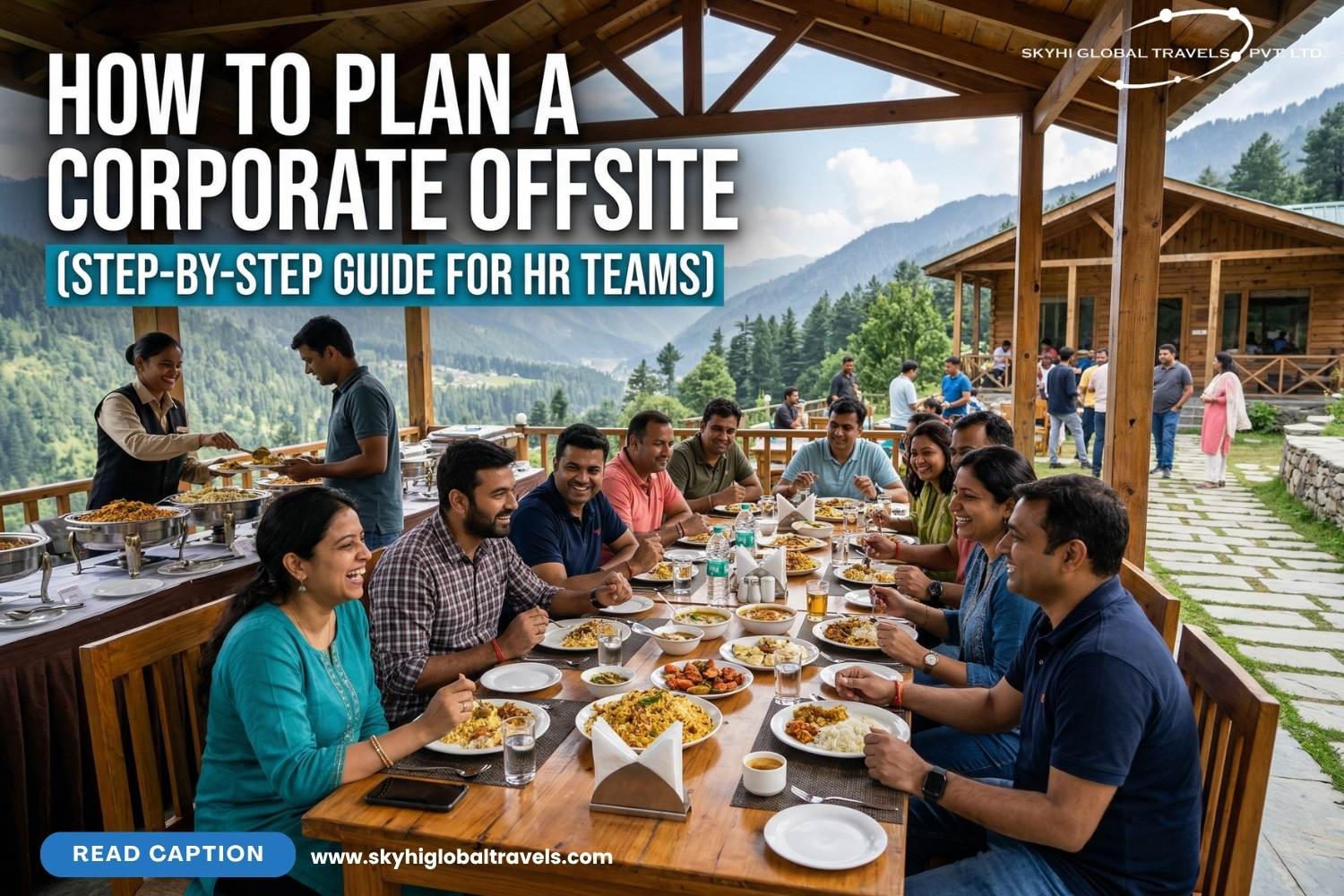
Corporate offsites are no longer just team outings.
In today’s work environment, they are powerful tools for improving alignment, strengthening culture, and driving meaningful business outcomes.
But here’s the reality.
A successful offsite does not happen by chance.
It requires clarity, structure, and careful planning.
For HR teams, planning an offsite can feel overwhelming. There are multiple moving parts, from budgeting and travel to agenda design and execution.
Step-By-Step Guide for Corporate Offsite
Step 1: Start With a Clear Purpose
Before choosing a destination or booking a venue, ask one question:
Why are we doing this offsite?
Is it for:
- Strategic planning
- Team bonding
- Leadership alignment
- Celebrating performance
Without clarity, even the best destination will fail to deliver results.
Experts also emphasize that defining goals early helps shape every decision that follows.
Tip: Limit your focus to 2–3 key outcomes.
Step 2: Define Budget, Duration, and Scope
Once the objective is clear, move to practical planning.
Define:
- Budget per person
- Total duration (1 day, 2 days, 3 days)
- Inclusions such as travel, stay, activities
A structured budget avoids last-minute compromises and ensures better decision-making.
Tip: Always keep a buffer for unexpected costs.
Step 3: Choose the Right Destination and Venue
The destination sets the tone for the entire experience.
While selecting a location, consider:
- Accessibility for all employees
- Travel time and convenience
- Type of environment (beach, mountains, city, retreat)
- Availability of meeting and breakout spaces
The right environment improves focus, creativity, and team interaction.
Tip: Choose the destination based on purpose, not just popularity.
Step 4: Build a Balanced Agenda
A common mistake companies make is overloading the schedule.
A strong offsite agenda should include:
- Business sessions (strategy, planning, alignment)
- Team-building activities
- Reflection and discussion time
- Free time for informal interaction
The most effective offsites balance work and engagement rather than focusing on just one.
Ideal mix: 60–70% work, 30–40% engagement.
Step 5: Plan Travel and Logistics Early
This is where most HR teams face challenges.
You need to coordinate:
- Flights or transportation
- Hotel bookings
- Airport transfers
- Meals and dietary preferences
- On-ground coordination
Poor planning here can disrupt the entire experience.
Tip: Start planning at least 8–16 weeks in advance depending on scale.
Step 6: Communicate Clearly With the Team
Communication is often underestimated.
Share:
- Agenda
- Travel details
- Expectations
- Packing or preparation guidelines
Clear communication improves participation and avoids confusion during the event.
Tip: Send updates at every stage.
Step 7: Focus on Experience, Not Just Execution
An offsite is not just about completing sessions.
It is about how people feel.
Small details matter:
- Smooth check-ins
- Warm welcome kits
- Comfortable schedules
- Thoughtful activities
People may forget sessions, but they remember the experience.
Step 8: Prepare for Unexpected Situations
No matter how well you plan, things can change.
Be ready for:
- Flight delays
- Last-minute changes
- Weather disruptions
- Technical issues
A backup plan ensures everything stays under control.
Step 9: Capture Outcomes and Feedback
An offsite without follow-up loses its impact.
After the event:
- Collect feedback from participants
- Document key decisions
- Share outcomes with teams
Offsites should drive action, not just conversation.
Step 10: Measure Success
Finally, evaluate the impact.
Ask:
- Did we achieve our objectives?
- Did team alignment improve?
- Was the experience smooth?
A successful offsite creates clarity, energy, and direction for the future.
Common Mistakes HR Teams Should Avoid
- Starting with destination instead of purpose
- Overloading the agenda
- Ignoring employee preferences
- Delaying travel planning
- Underestimating logistics
Avoiding these mistakes can significantly improve outcomes.
Final Thoughts
A corporate offsite is not just an event.
It is an investment in people, culture, and performance.
When planned well, it creates alignment, builds trust, and brings teams closer in ways that everyday work environments cannot.
For HR teams, the goal is not just to organize an offsite.
It is to create an experience that delivers lasting impact.
Planning a corporate offsite can feel complex, but the right support makes all the difference.
Connect with SkyHi Global Travels to plan a seamless, well-structured offsite that aligns with your business goals and delivers real outcomes.